

The Science of the Stone: Why Stone-Milling Wins Over Modern Roller Mills
In the modern world, “faster” is almost always considered “better.” We want faster internet, faster cars, and faster food processing. However, when it comes to the staple of the Indian diet—the humble Atta—speed is actually the enemy of nutrition.
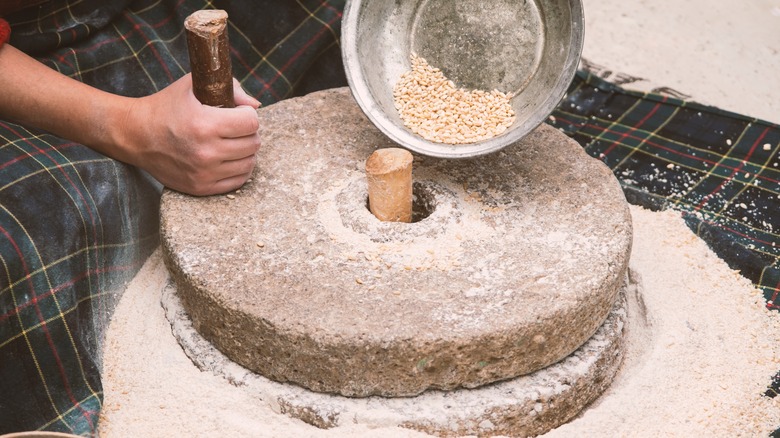
At Shuddha Roots, we have made a conscious decision to reject industrial high-speed milling in favor of the ancient Stone Chakki. While it takes more time and effort, the science is clear: stone-grounding is technically, nutritionally, and historically superior to the mass-produced roller-milled flour found on most supermarket shelves.
In this article, we explore the physics and biology of why the “Stone” is still the undisputed king of milling.
1. The “Cool” Factor: Thermal Protection of Nutrients
The biggest technical flaw in modern industrial roller mills is heat.
Industrial mills use heavy steel rollers that spin at incredibly high speeds to process thousands of kilograms of wheat per hour. This friction generates intense heat, often reaching temperatures that “cook” the flour before it even leaves the factory.
Why does heat matter?
Vitamin Destruction: Essential B-complex vitamins (B1, B2, B3) and Vitamin E are heat-sensitive. The high temperatures of roller mills effectively “burn” these nutrients away.
Protein Denaturation: Wheat contains vital proteins, including gluten. Excessive heat can denature these proteins, changing their molecular structure and making them harder for your body to process.
Enzyme Loss: Natural enzymes that aid in digestion are destroyed by high heat.
The Shuddha Roots Approach: We use traditional stone mills that rotate at a low RPM (Revolutions Per Minute). This is essentially “Cold-Pressed” milling. By keeping the flour cool throughout the process, we lock in the natural enzymes and vitamins, ensuring that the Sehore Sharbati wheat retains its full biological value from the field to your plate.
2. The Wheat Germ & The Secret of “6-Hour Softness”
If you’ve ever wondered why some rotis turn into “cardboard” within an hour of cooking, the answer lies in the Wheat Germ.
The germ is the “heart” of the wheat kernel. It is packed with healthy fats, natural oils, and antioxidants.
The Industrial Problem:
In a roller mill, the wheat germ is often removed entirely. Why? Because the natural oils in the germ can reduce the shelf-life of the flour to just a few months. Large corporations prefer “dead” flour that can sit in warehouses for half a year without spoiling.
The Stone-Milling Solution:
In a stone chakki, the wheat germ is not removed. Instead, it is crushed against the stones. This process emulsifies the natural oils, spreading them evenly across every grain of flour.
This is the Shuddha Roots secret. These natural oils act as a built-in moisturizer for your dough. When you cook a Shuddha Roots phulka, these oils trap moisture inside, which is why our rotis stay incredibly soft for 6+ hours, even in a lunchbox.
3. Starch Integrity and the Glycemic Index
The way a grain is broken determines how your body digests it.
Roller Mills tend to “shatter” the starch granules of the wheat because of the high-pressure steel impact. This creates a very fine, uniform powder that the body converts into sugar almost instantly. This leads to a High Glycemic Index (GI), causing rapid insulin spikes—a major concern for diabetics and those watching their weight.
Stone Mills “shear” the grain. The stone’s natural texture creates a more varied particle size. While the flour feels soft to the touch, it maintains what scientists call “starch integrity.”
Slow Energy Release: Because the particles are more complex, your digestive enzymes take longer to break them down.
Stable Blood Sugar: This results in a slower, more sustained release of energy into your bloodstream, keeping you energetic for hours without the “sugar crash.”
4. Historical Heritage: What Our Bodies Are Built For
For over 5,000 years, the human digestive system has evolved alongside stone-ground grains. From the Indus Valley Civilization to the royal kitchens of the Mughals, the stone chakki was the only way to process wheat.
Our gut microbiome is biologically adapted to recognize and ferment the fiber and complex starches produced by stone-milling. Modern roller mills have only been around for about 150 years—a blink of an eye in evolutionary terms. Many modern “gluten sensitivities” are actually reactions to the highly processed, bleached, and heat-damaged flour produced by industrial mills, rather than the wheat itself.
By choosing Shuddha Roots, you are returning to a method of eating that is hard-coded into your DNA.
5. Flavor and Aroma: The Sehore Sharbati Connection
Finally, we must talk about the taste. Sehore Sharbati is famous for its high rain-water content and natural sweetness.
When you grind this premium wheat in a stone mill, the slow process preserves the aromatic compounds of the grain. High-speed mills often dissipate these volatile oils, leaving the flour smelling “dusty” or neutral.
When you open a bag of Shuddha Roots, you are greeted with the earthy, sweet scent of a fresh harvest. That aroma is the smell of intact nutrients.
Conclusion: Investment in Your Health
A roller mill is designed for the profit of the manufacturer—maximizing speed and shelf-life. A stone mill is designed for the health of the consumer—maximizing nutrients and digestibility.
At Shuddha Roots, we believe that the foundation of a healthy life is the daily roti. By choosing traditional stone-grounding, we ensure that every bite you take is a testament to purity, science, and tradition.
Experience the difference of technically superior milling. Switch to Shuddha Roots today.